
NJ State Police have charged a 17-year-old boy of Montgomery, NJ, with second-degree distribution and third-degree possession of child sexual exploitation and abuse material (CSEAM), and fourth-degree cyber harassment.
The Montgomery High School student was arrested at his home in March, accused of creating and sharing nude AI images of his female classmates.
Hoping to provide answers to concerned staff, students and parents, the Montgomery school district said the inappropriate AI images were created outside of school hours and away from school grounds.
The student is currently being detained at the Middlesex County Juvenile Detention Center while he awaits a detention hearing.
This alarming case is not the only one close to Scotch Plains-Fanwood High School.
Just three years ago, over 30 girls at Westfield High School were victimized by the creation and distribution of their faces on pornographic images.
“I didn’t think it would be one of my classmates, I thought it would just be creeps online but it was one of my classmates,” Westfield High School student Francesca Mani told ABC in 2023.
No criminal charges were ever brought against the Westfield High School student who created and distributed the AI images.
All students have the right to feel safe among their classmates. Although schools and parents cannot stop pornographic material from being made by students, it is their responsibility to educate children on the dangers and consequences of such behavior.
Just last month, two teenage boys in Lancaster, PA, received probation after admitting to creating about 350 images of at least 59 girls who were under the age of 18.
Despite the AI-created photos being evidently computer-generated, the tangible effects on these young girls’ lives are excruciatingly real.
According to the National Library of Medicine, “findings suggest that [nonconsensual sharing of sexual images (NCSSI)] is associated with negative mental health and social repercussions. Five quantitative studies found evidence suggestive of increased depression, anxiety and suicidal ideation in young people following NCSSI.”
For these cases, whose harassers have each gained sympathy for “one critical wrong move [costing] them their childhood,” there are countless girls who have felt fear, shame, humiliation and a loss of control due to these boys’ contemptuous actions.
These incidents are not a sign to protect the future of males who disrespect the dignity of females; they are a sign that we need to do more to protect female students against the depravity of technology in the wrong hands, being used against them.
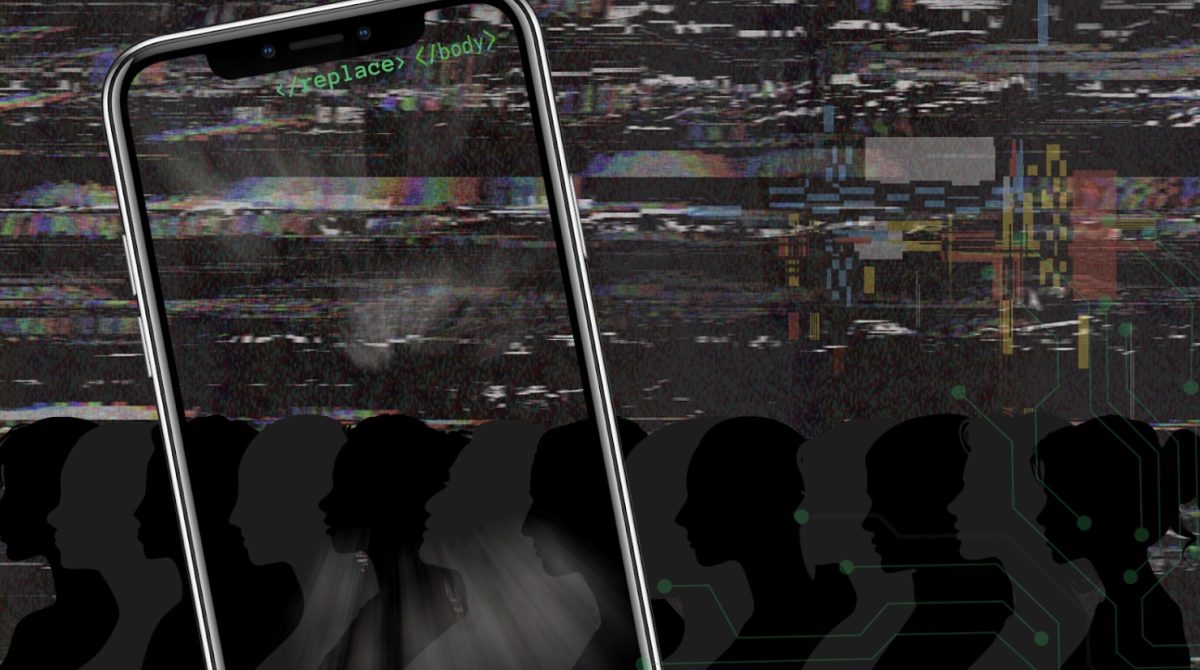
These are real cases, and they are happening in our country, in our state and only a few miles down the road. It is time to address the increasingly disturbing presence of AI deepfakes being used to target teenage girls in schools before it is too late.